
Francine — Chapter Three
Some men carry storms

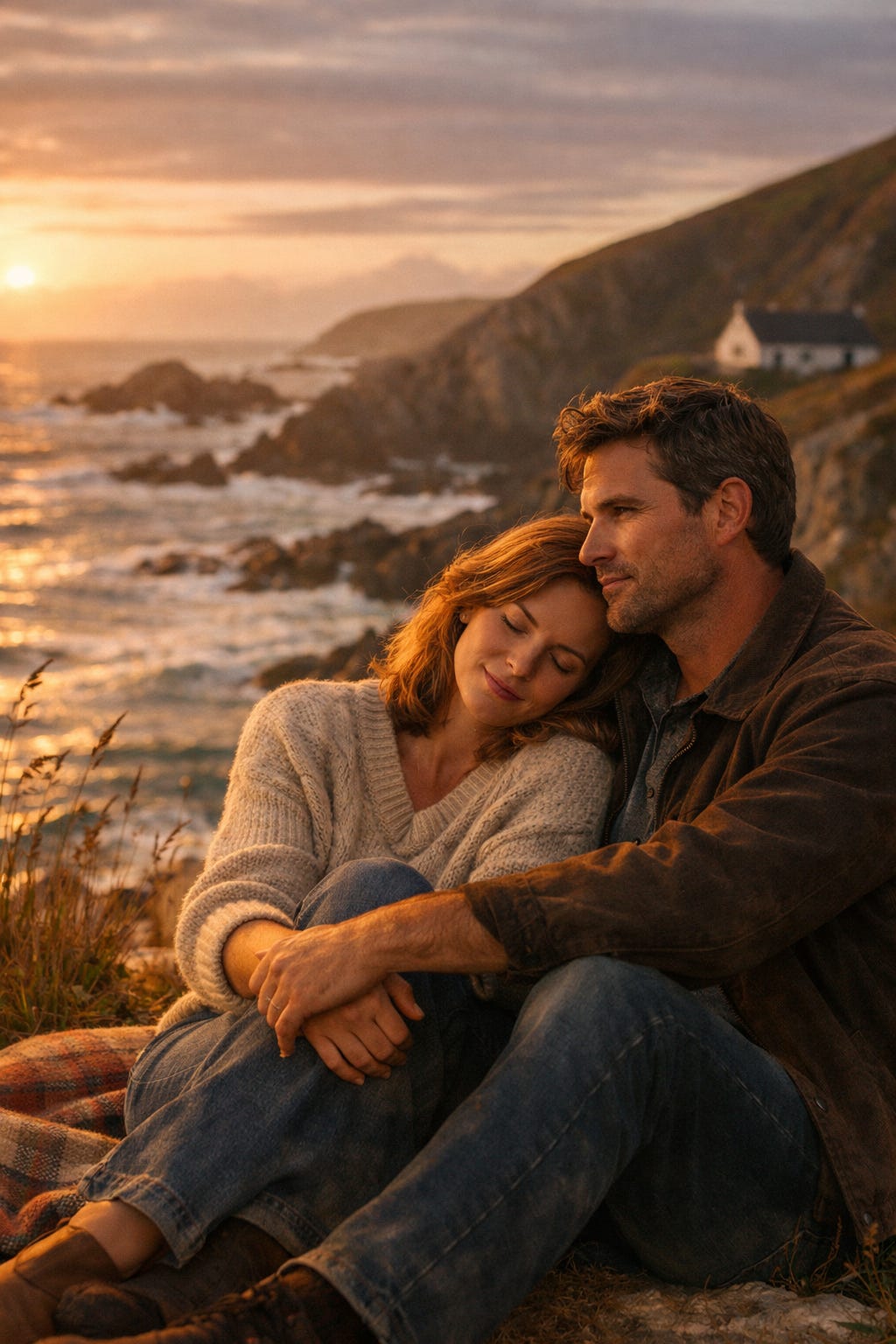
“Good, he’s here, Francine. We’ll soon have you under way,” Bunny says.
We’ve spent the last hour talking about music, his life, and how it shaped everything.
He wanted to be a musician from the age of six, listening to his mother play. But his father insisted on something steadier, so he studied agriculture at university. Land management. Sensible things.
Music, though, never left him.
It never does.
“Rachel,” he speaks her name gently.
They met through family, distant, complicated, but what they had was simple. Certain. The kind of thing people try to break because they don’t understand it.
“They could tear at us,” he says, “but they could never win. They were fighting something too honest. She was a dancer. A musician. And when she grew ill, all he could do was play for her. She died at thirty-seven,” he says, voice trailing.
A knock at the door pulls him back.
The breakdown driver stands there in a yellow rain suit, water running from the hood.
“Aye, won’t take long,” he says. “I’ll jump her with a slave battery.”
“Thank you,” Bunny replies, closing the door behind him.
I pull on my jacket.
“Your life… it’s extraordinary, Bunny. Thank you for sharing it with me.”
He smiles, modest, almost dismissing it.
“Thank you for listening. It’s been a while since I’ve had company. Not that I’m lonely,” he adds, “but it’s good, now and again, to remember things properly.”
He pauses.
“I’ll call you tomorrow. I know someone who can help move the piano.”
Outside, the car is already running. The driver lowers the bonnet.
“That’ll get you home, lassie,” he says. “But you’ll be needing a new battery soon.”
I tip him, thank him, and pull slowly out onto the road.
The road is empty. Dark.
It feels as though I’ve stepped out of something and back into the ordinary world.
Was it real?
A man like Bunny. A place like that.
Or just a pause between storms.
The lyrics come before I can stop them.
Fingers on the keys
As the love of his life is freed
On an old upright piano
He doesn’t need to speak too much
There’s time for that tomorrow
For a few hours, I forgot everything.
The funeral. Gilda. The house. The will.
Grief loosened its grip.
Back at the cottage, the quiet greets me.
I hang my jacket, open the fridge, and stare without interest. Then reach for the wine instead.
One glass.
Then the phone rings.
“Francine, at last!” It’s Lois.
Her voice fills the room instantly, bright, dramatic, impossible to ignore.
She apologizes. She talks. She confesses she’s met someone.
Of course she has.
“I think he’s my first traumatic romantic London experience,” she says.
I laugh despite myself.
We talk about Clive.
Or rather, she talks, I deflect.
“Poop shame,” I say at one point. “Dogs won’t make eye contact when they’re at it. Same with Clive after he slept with his personal trainer.”
There’s a pause.
Then Lois bursts out laughing.
When the call ends, the cottage feels quieter than before.
Not lonely.
Just… waiting.
I make a sandwich, shower, and think about where the piano will go.
Under the window, I decide.
Where the light falls.
Where the forest begins.
Where I met Brannon.
Brannon.
I wonder who he’s with.
A knock at the door.
Nine-thirty.
I hesitate.
“Francine—it’s Brannon.”
I check my reflection, though it makes no difference, and open the door.
“Hi,” I say, trying to sound casual. “This is—unexpected.”
“I saw your lights,” he says. “Dad called. Wanted to be sure you got home.”
“Your Dad?”
“Aye. The man you met. Bunny.”
I stare at him.
“Bunny is your father?”
He smiles faintly. “He’s just Dad to me.”
He steps inside, and the cottage feels smaller somehow.
Or perhaps he’s just that huge.
“I can help with the piano,” he says. “Dad asked.”
“Of course. Yes. Tea?”
“Always.”
We fall into an easy rhythm.
Almost.
Then I ruin it.
“How do you manage in bed, Brannon?” I say, and immediately want the ground to open beneath me.
He looks at me.
Then laughs.
“Well now, we’re moving fast, aren’t we?”
I flush scarlet.
“I didn’t mean…”
“I know what ye meant,” he says, still smiling. “Aye. I’ve a longer bed. Still not long enough.”
It settles.
For a moment.
Then—
“And you were the result of all that love,” I say, nodding toward the photograph he’s shown me of his parents.
Something changes.
Subtle. But real.
“Aye,” he says, but the warmth has gone from his voice.
He sets down his cup.
“I’ll send Brian with the truck in the morning. Ten o’clock.”
“Brannon, did I…?”
“Goodnight, Francine.”
And he’s gone.
I stand there, the silence rushing back in.
What did I say?
What did I touch without knowing it?
I want to go after him.
Apologize.
Undo whatever I’ve done.
Instead, I stand in the middle of the room and feel something unfamiliar.
Not grief.
Not anger.
Something lighter.
More dangerous.
I care.
The phone rings again.
Gilda.
Of course.
I deal with her quickly.
Firmly.
End the call.
But when I lie down, it isn’t Gilda I think about.
It’s Brannon.
And the way something in him closed.
Morning comes with the sound of a tractor.
I’m out of bed before I think.
Not him.
At ten, a truck arrives.
Brian.
We drive in easy silence.
When we arrive, Bunny is in the garden.
And somewhere beyond him, Brannon is already there.
“Can I get ye a cup of tea, lass?” Bunny calls.
I easily step into a hug.
And this time, I understand something I didn’t before.
Some men offer comfort.
Some men carry storms.
And somehow, I’ve found both men.
I must know more!
I like to charge through a story. This gentle unfolding challenges my patience. But each chapter is gently satisfying.